This post may contain affiliate links, meaning if you click on it and make a purchase I'll receive a small commission at no cost to you. Read the full disclosure here.
Dementia water hydration! Tough situation for many caregivers. How to get your loved one to drink more water? Read on to find information, tips and a list of suggested foods to help keep your loved one with dementia hydrated.

I never really drank much water until I started working out and was told by multiple people to drink more water. Since then, I have come to understand how much water does for us.
As water is good for us, it is also important for people with dementia.
Water helps us in so many ways –
It supports cardiac function
It supports cognitive function
It circulates our blood
Aids in digestion
Removes waste
Lubricates our joints
It keeps our skin healthy and not dry
Regulates our body temperature
Transports nutrients
As a caregiver of a loved one with Mild Cognitive Impairment or Alzheimer’s it is important to know some signs of dehydration and what to look for. Like these –
Muscle cramping
Nausea
Dizziness
Headaches
Dry skin
Bad breath
Dry mouth
Sunken eyes
Dark color to urine
Tiredness
Confusion
Left on his/her own, a person with dementia faces some hydration challenges.
You and I know when we are thirsty and we know how to quench our thirst.
A person with dementia does not.
Think about it. There are a lot of steps involved in getting a glass of water. Do they know the location of the glasses? Do they even remember what a glass is, what it looks like and that a glass holds a liquid? Do they know how to turn on a faucet to get water?
Here’s another challenge. Water can look invisible to some people with dementia. If they have a clear glass with water in it are they even able to tell that it has water in it?
Other challenges –
They may be unable to communicate to you they are thirsty
They may not be able to get a drink by themselves
They may not feel thirsty
They may forget to drink
They may outright refuse to drink
They may have difficulty swallowing
So, how do you get your loved one to drink more?
You can try things like this –
Use a colorful, attractive cup/glass
You might have to try different colored glasses to see which color works as far as getting your person to drink
Use a straw in a glass/tumbler or an adult sippy cup like the ones listed below or bottles with reminder lights or movement
Offer fluids with a meal
Offer a variety of fluids throughout the day (see below for water alternatives)
Leave a bottle of water on the counter or close to them
Getting a routine of regular hydration times is a good idea.
There are some other ways you can increase the intake of water.
You can –
Have your loved one drink water upon waking up
Try getting them to drink something at least once an hour
Remember to have some variety of liquid with a meal
If you go outside somewhere, encourage a drink when you return home
Encourage them to drink a whole 4-6 oz when they take a pill
There are water bottles that will light up & vibrate to remind people
What can you do if your loved one doesn’t like water?
Offer them alternatives –
Fruit juice (although watch the sugar level)
Vegetable juice
smoothies
milk
Herbal teas
Coffee, tea (in moderation and no sugar added)
Seltzer or club soda
Coconut water
Fruit-infused water (you can add fruits and herbs to ice cubes)
Applesauce, jello, yogurt, popsicles, ice cream
Broth based soups (watch the salt content)
If getting more water by drinking alternatives doesn’t work, you can intentionally cook with more food items that are high in water content such as –
many fruits
many vegetables
offering a variety of liquids other than water
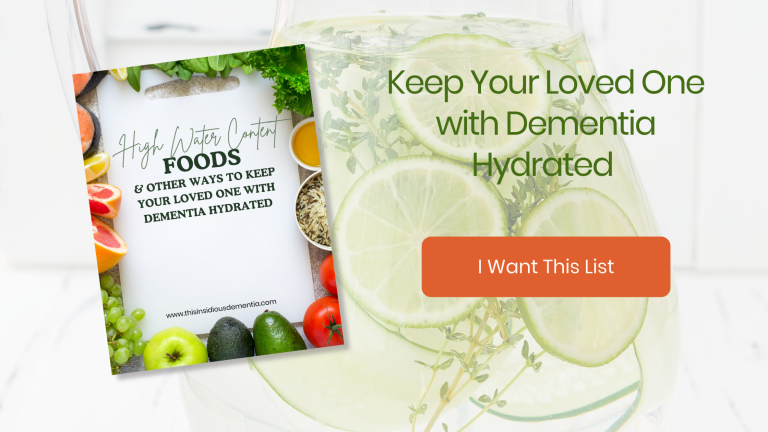
If you’d like a more complete list of foods with high water content, then click in the box below to get a list.
Caregivers – you also should be regularly hydrating.
Remember – self care is just as important. You can’t take care of your loved one if you don’t take care of yourself.
Consider external factors that will play into the need for water such as hot weather and physical activity. Air conditioning as well.
Some medications may increase the number of bathroom trips so you will want to adjust fluid intake accordingly.

Be sure to consult medical doctors if you have any concerns about your loved one’s water intake or your own.
As I said above, you can’t take good care of your loved one if you don’t take good care of yourself.